THE DOMINANCE OF THE VISUAL REALM
THE DOMINANCE OF THE VISUAL REALM IN CURRENT CULTURE
Katrina Keshaw. Ala Champ Magazine Issue No. 9. London/Tokyo Winter 2015. The Rebel Issue. Personal Stories: Insight & Perspective.
We change languages, we change habits, we change opinions, we change clothes, we change everything. Everything changes. And fast. Images above all. ¹
I start with this quote by Wim Wenders from the opening scene of his documentary film about Japanese fashion designer, Yohji Yamamoto. Filmed near the end of the 1980’s on the brink of the digital revolution, Wenders ponders the relationship between cities, identity and cinema in the new Information Age. Throughout the documentary, Wenders uses a variety of visual techniques to fool the audience as he explores the underlying theme of the way in which images will change our perception of reality in the future.
The first scene places us in the passenger seat of a taxi as it drives through the city of Tokyo, Japan. The car is moving in real time – along an expressway towards Nihonbashi. On the dashboard is a small cinema screen, displaying footage of what we can see of the road ahead. The footage is also perceived to be in real-time, however as Wenders’ dialogue moves from speaking of traditional negative film to digital film, the footage on the cinema screen abruptly pauses, then rewinds a few seconds and resumes. It is evident at this moment that the footage is of an entirely different street. Our subconscious reliance on using our eyes to define our environment is suddenly questioned. We are faced with needing more than just sight to define what is real and what is not.
In western culture, sight has historically been regarded as the noblest of the sense, and thinking itself thought of in terms of seeing. ² To see is to have knowledge. To see is to have vision. In the Information Age, sight and visual image continue to reign supreme. With the development of the internet, and screen-based devices, we are increasingly experiencing the world primarily through our eyes. Yet, with an abundance of visual stimuli, we find ourselves overlooking the detail, and having to capture a moment with a smartphone photo to remember how it made us feel.
As we play away on our mobile devices and computers, the way we experience place is also changing. Staring at our screens, our eyes are using focused vision. Our near-peripheral vision is also engaged by the screen, and depending on the distance between the device and our eyes, our mid-peripheral vision may also be seeing the screen. Focused vision objectifies and pulls us out of space, rendering us as mere spectators. Things are being viewed without context. This can cause us to feel removed and combined with the absence of our other senses, unable to establish a sense of place within our surroundings. By comparison, clear peripheral vision integrates us with space.
The dominance of visual imagery in today’s modernised societies extends beyond the individual and one’s mobile device. Finnish architect Juhani Pallasmaa asserts that “visual artists, photographers, architects, and professional designers, are conditioned to automatically assume that the word image means visual image. So dominant is the visual sense in our appreciation of the world, that we consciously and subconsciously file our impressions as visual images – in our scrapbooks, diaries, sketchbooks and in our ‘mind’s eye’”. ³
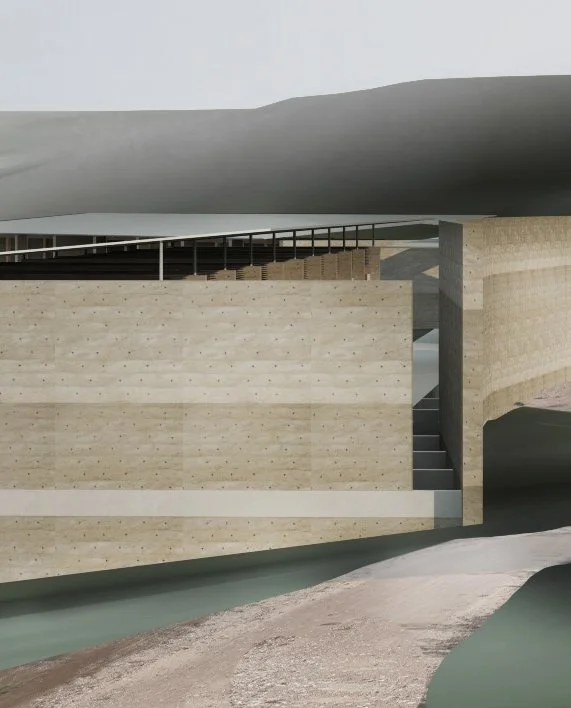
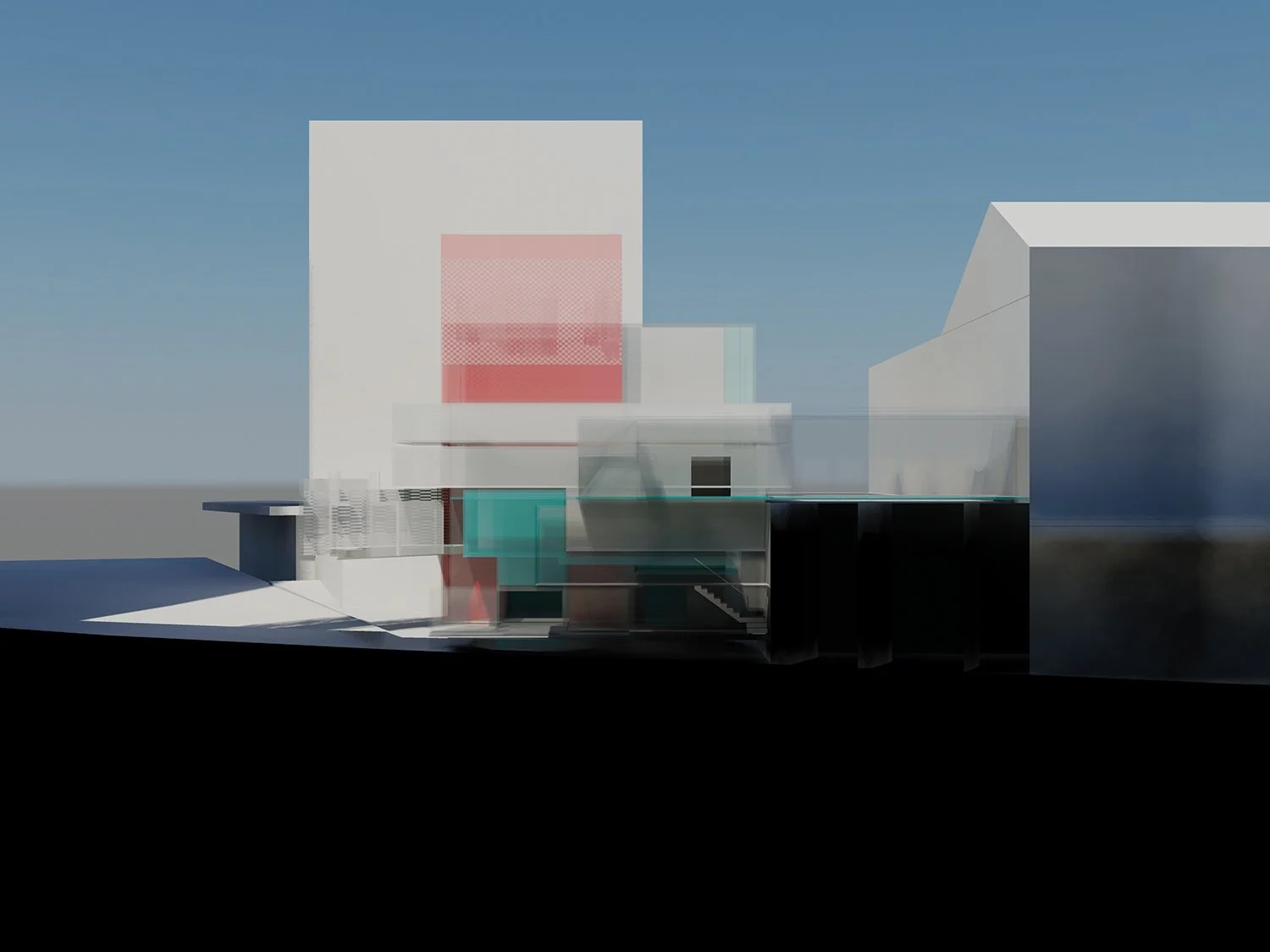
In the field of architecture, competitions are being won and opinions formed based on visual images alone. Yet a building is encountered, not only viewed. It requires all of our senses to be engaged – sound, touch, smell, taste and sight. It is approached, confronted, entered, related to one’s body, moved about and utilised as a context and condition for activities and things. If architecture of today is unable to create an atmosphere where one can feel space and a sense of self, we may reach a point where we find ourselves questioning reality, just as Wim Wenders provokes us to in the opening of his documentary ‘Notebooks on Cities and Clothes’.
As society moves further into the Information Age, it is learning, changing and shaping itself at a rapid speed. Let us hope we can find a sensory balance in this period, continuing to learn and reflect on the past, as we move into the future.
¹ Wim Wenders. Notebooks on Cities and Clothes: Yohji Yamamoto. Film. 1989
² Juhani Pallasmaa. The Eyes of the Skin: Architecture and the Senses. Wiley. 2005
³ Juhani Pallasmaa. The Embodied Image: Imagination and Imagery in Architecture. Wiley. 2011
REFERENCE VIDEO
RELATED WORK